

A holiday transfer booking workflow is the structured process travellers and agents follow to secure reliable ground transport between airports and destinations. It covers every stage from initial search through payment, driver assignment, and handling last-minute changes. The core components are consistent across modern systems, whether you are booking a private executive saloon or a family minibus.
The key elements of any transfer booking workflow include:
- Search and route entry: pickup and drop-off locations, travel dates, passenger and luggage counts
- Vehicle selection: class, capacity, and optional extras such as child seats or additional stops
- Flight details: flight number input for automatic tracking and schedule adjustments
- Payment: secure online processing with full price transparency before confirmation
- Confirmation and communication: instant email confirmation, driver details, and pre-departure reminders
- Travel day management: real-time flight tracking, driver notifications, and meet-and-greet procedures
- Amendments and cancellations: self-service changes within defined cut-off windows
The three stakeholders in this process are the traveller, the travel agent or corporate booker, and the transfer operator. Each relies on the booking system to keep information accurate and communication timely.
What does a modern transfer booking system actually do?
A transfer reservation system in 2026 is far more than a digital form. It manages vehicle availability, pricing, driver assignment, and customer communication in a single connected workflow.
The features travellers and agents should expect include:
- Real-time availability and dynamic pricing: the system displays only vehicles that are genuinely free for the requested date and time, preventing overbooking
- Flight tracking integration: when a flight is delayed, the system updates the driver automatically and adjusts the pickup schedule without the traveller needing to call anyone
- Multi-channel access: full booking capability via desktop browser and mobile, with app-based tracking on travel day
- Secure payment processing: credit card, PayPal, and bank transfer options, all processed through PCI-compliant, SSL-encrypted gateways
- Automated communications: instant booking confirmation by email, a reminder 24 hours before pickup, and driver details including vehicle type and licence plate sent 1–2 hours before departure
- Customisation options: vehicle class upgrades, meet-and-greet service, child seats, extra stops, and return journey booking in one transaction
- Calendar and third-party integration: syncing with Google Calendar, accounting software, and online travel agencies for corporate and agent workflows
- Flexible cancellation handling: self-service amendments up to a defined deadline, with free cancellation typically available when cancelled at least 24 hours before pickup
- Pricing transparency: all fees, including tolls, airport charges, and any surcharges, displayed before payment so there are no surprises at checkout
Pro Tip: When evaluating a booking platform, check whether the quoted price is the final price. If tolls or airport fees appear only at checkout, treat that as a red flag.

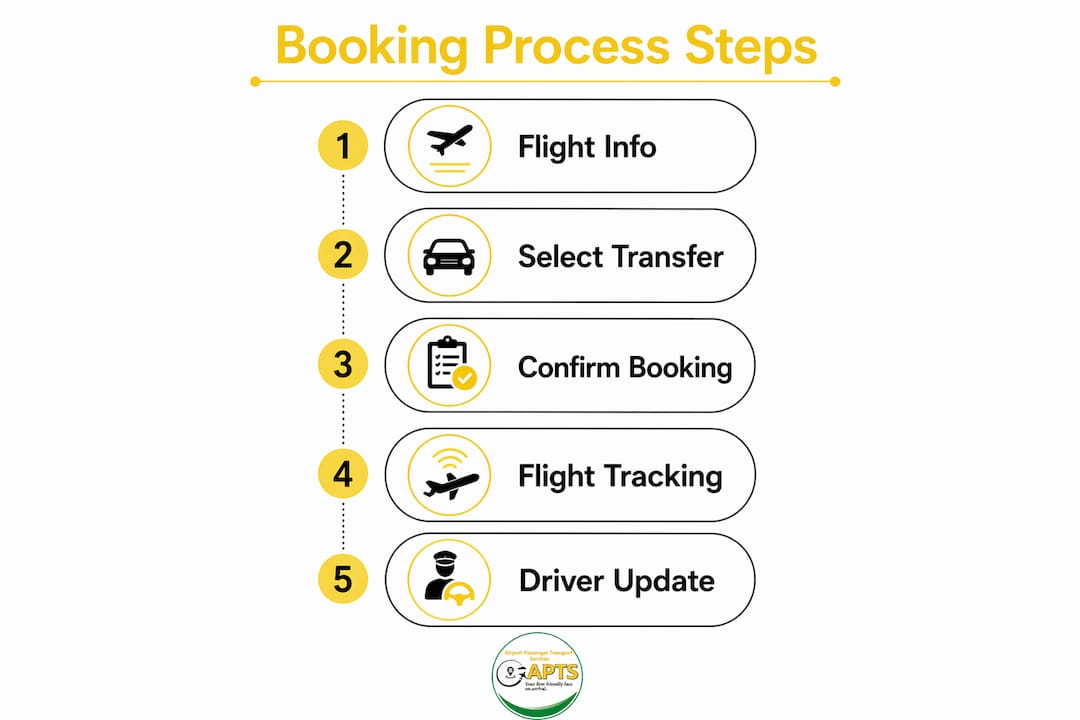
How the holiday transfer booking workflow runs, step by step
Understanding each stage helps travellers and agents avoid the errors that cause delays and missed connections.
-
Enter your route and travel details. Input the pickup location (airport name or IATA code), destination address, travel date, arrival or departure time, and the number of passengers and bags. For hotel drop-offs, use the full address rather than just the hotel name, as many chains have multiple locations in the same city.
-
Select your vehicle class. Most platforms offer economy, comfort, and executive saloon options for smaller groups, with minivans and minibuses for larger parties. Choose based on passenger count and luggage volume. Sizing up costs a little more but avoids the far greater inconvenience of arriving with bags that will not fit.
-
Add optional extras. Child seats, extra stops, meet-and-greet service, and return journey bookings can usually be added at this stage. Each addition updates the total price in real time.
-
Provide your flight number. This is the single most consequential field in the form. Without a flight number, the system cannot track your flight, and the driver is locked to a fixed pickup time. If your flight lands late, you risk losing your transfer entirely.
-
Review the full price and cancellation terms. Confirm that the quoted price includes all fees. Read the cancellation policy before paying, particularly if your travel plans are not yet fixed.
-
Complete payment and receive confirmation. Payment processes securely online. A confirmation email arrives immediately, containing your booking reference, route details, vehicle type, and payment receipt. Save this email and do not delete it until the transfer is complete.
-
Receive driver details before travel. Between 12 and 24 hours before pickup, a second notification arrives with the driver’s full name, phone number, vehicle colour, and licence plate. Some platforms deliver this through an app with a map showing the exact meeting point.
-
Travel day: flight tracking and meet-and-greet. Your driver monitors the flight in real time. If it is delayed, the pickup time adjusts automatically. After clearing customs and collecting luggage, head to the arrivals hall. Your driver will be waiting with a name sign.
-
Handle amendments or cancellations promptly. If your itinerary changes, contact the platform as early as possible. Most changes made more than 24 hours before pickup are free. Waiting until the morning of travel significantly reduces your options.
Best practices for booking holiday transfers in the UK
The transfer booking process rewards preparation. These practices protect both travellers and agents from the most common and costly mistakes.
- Book at least 24–48 hours in advance. Walk-up taxis at airports can be significantly more expensive than pre-booked transfers and offer no price certainty. During peak seasons, book 3–4 weeks ahead to secure availability and lock in pricing before demand spikes.
- Always provide the correct flight number. Booking failures frequently occur when flight details are missing, leaving travellers on a rigid schedule with no flexibility for delays.
- Verify your terminal before travel. Terminal mix-ups are among the most common causes of transfer problems. Confirm your specific terminal a day or two before departure, as airlines occasionally change them.
- Do not choose solely on price. Cheaper options often come with older vehicles, less experienced drivers, and limited customer support when things go wrong. Transparent pricing that includes all fees upfront is a stronger indicator of a trustworthy provider than the lowest headline rate.
- Save your confirmation details offline. Airport Wi-Fi and roaming can be unreliable. Keep a screenshot of your confirmation with the driver’s name, phone number, and vehicle details accessible without an internet connection.
- Check cancellation terms before confirming. Know exactly what happens if you need to cancel or modify. A provider offering a full refund with at least 24–48 hours’ notice is the standard to look for.
- For corporate bookings, use licensed providers. Corporate clients benefit from standardised booking workflows that cross-check licensed operators, fulfilling duty-of-care obligations and reducing liability exposure.
- Use transparent pricing systems. Hidden fees for tolls, airport charges, and gratuities are a persistent issue. Confirm the total cost before entering payment details.
For further guidance on stress-free airport transfers and how to schedule transport around changing flight times, preparation remains the most reliable tool available.
Key takeaways
A well-executed holiday transfer booking workflow depends on accurate data, advance planning, and a system that communicates reliably at every stage.
| Point | Details |
|---|---|
| Book well in advance | Standard practice is to book at least a day or two ahead; during busy travel periods, booking several weeks in advance helps ensure availability and price stability. |
| Flight number is critical | Without it, the system cannot track delays, leaving travellers on a fixed schedule with no flexibility. |
| Confirm all fees before paying | Reputable platforms display tolls, airport charges, and all surcharges in the quoted price, with no additions at checkout. |
| Save confirmation details offline | Keep driver name, phone, and vehicle details accessible without internet, as airport connectivity can be unreliable. |
| Check cancellation terms first | Prefer providers that offer free cancellation if done with sufficient notice in advance of pickup. |
Why the cheapest transfer is rarely the safest choice
The most overlooked aspect of holiday transfer management is the gap between price and reliability. Travellers who select a provider based on the lowest rate frequently encounter older vehicles, drivers with limited local knowledge, and no meaningful customer support when a flight is delayed or a driver fails to appear.

A well-built booking workflow does not just confirm a reservation. It tracks the flight, updates the driver, sends timely notifications, and provides a clear escalation path if something goes wrong. A provider that cannot demonstrate these capabilities in their booking system is unlikely to deliver them on travel day, regardless of what their website promises.
For corporate travellers, the stakes are higher still. Duty-of-care obligations require that employers and travel managers verify that ground transport providers hold the appropriate licences and operate to a defined standard. Standardised booking workflows that cross-check licensed operators are the practical mechanism for meeting that obligation, not an optional refinement.
The question worth asking before confirming any transfer is not “what is the price?” but “what happens when something goes wrong?” A provider with a clear answer to that question, backed by a system that handles flight tracking, driver communication, and cancellations without manual intervention, is the one worth booking. For those planning airport transfers across Ireland and Spain, Apts offers executive and chauffeur-grade services built around exactly these standards.
Recommended
- How to plan holiday airport travel: your 2026 guide
- Corporate transfer booking guide for executives in 2026
- Tips for stress-free airport transfers in 2026
- What is a transfer service? Your 2026 travel guide
Article checked by Declan Rodden.