

Choosing a taxi service means selecting a provider based on reliability, safety, fare transparency, and comfort. These four criteria form the foundation of any sound taxi service selection guide, whether you are travelling for business in Dublin, on holiday in Spain, or connecting through an international airport. Regulatory bodies such as Transport for Ireland and digital booking tools like FreeNow have raised the standard for what travellers can reasonably expect. This guide gives you a structured, practical framework to assess any taxi provider before you book, so you arrive without surprises.
What are the key factors in a taxi service selection guide?
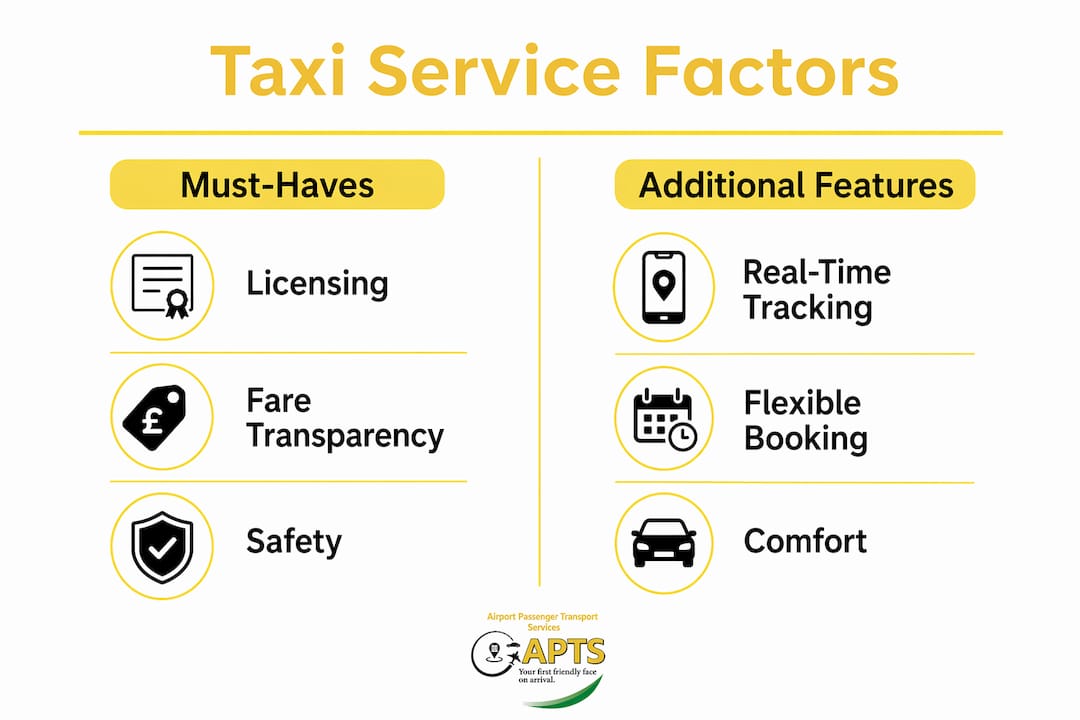
The most reliable taxi services share five measurable qualities: regulatory compliance, fare transparency, vehicle standards, driver professionalism, and booking convenience. Understanding each one gives you a repeatable method for comparing providers rather than relying on luck or habit.
Regulatory compliance and licensing
Licensed operators in Ireland must hold a Small Public Service Vehicle (SPSV) licence issued under Transport for Ireland oversight. In the UK, licensing authorities conduct right-to-work checks before issuing or renewing taxi licences, confirming drivers are legally authorised. This matters because an unlicensed driver operates outside any regulatory safety net, leaving you with no formal recourse if something goes wrong.
Fare transparency and payment standards
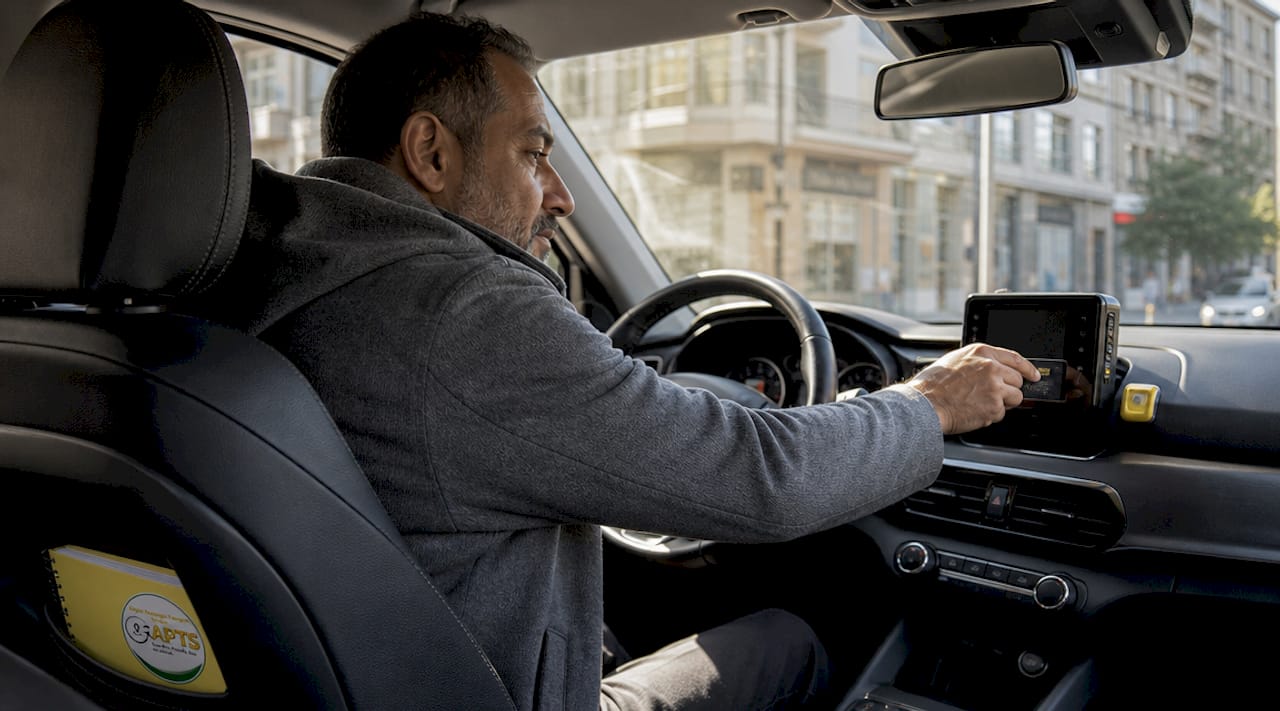
Metered fares are the clearest signal of a transparent operator. In London, licensed taxis must accept major cards including VISA, MasterCard, and Amex without surcharges, and must provide printed receipts on request. That standard sets a useful benchmark for evaluating operators elsewhere. If a driver refuses to use an approved payment device or cannot produce a receipt, treat it as a red flag.
Vehicle standards and driver professionalism
A well-maintained, clean vehicle signals that an operator takes their service seriously. Beyond appearance, consider whether the driver communicates clearly, demonstrates local knowledge, and behaves professionally from the first point of contact. These qualities matter most on long airport transfers or unfamiliar routes.
- Check for visible SPSV or equivalent licence plates and in-vehicle driver ID
- Confirm the vehicle matches the description provided at booking
- Note whether the driver greets you by name or confirms your destination unprompted
- Assess whether the vehicle has working seatbelts, adequate luggage space, and climate control
Booking tools and real-time tracking
FreeNow allows pre-booking up to four days in advance with real-time driver tracking and flexible payment options. That combination of advance scheduling and live visibility reduces the risk of no-shows and gives you documented proof of the journey. Platforms that offer in-app receipts and driver ratings add further layers of accountability.
Pro Tip: When comparing a local operator against a large platform, check whether the local provider offers a direct booking number, a named driver, and a fixed price confirmation in writing. These three elements often outweigh the convenience of an app alone.
How to evaluate taxi services practically
Comparing providers across a structured scorecard covering vehicle quality, driver ratings, communication, airport coverage, and reputation produces more reliable results than relying on a single positive experience. The following steps give you a repeatable evaluation process.
-
Verify the licence. Search the operator’s name or vehicle registration against the Transport for Ireland SPSV register or the relevant national database. A legitimate operator will have no hesitation directing you to their credentials.
-
Request a fare estimate upfront. For metered taxis, ask for the typical fare range for your route. For hackneys, always agree a fixed price before the journey begins, as hackneys are not metered and disputes after arrival are difficult to resolve.
-
Check online reviews across multiple platforms. A single five-star review means little. Look for consistent patterns across Google, Trustpilot, and any app-based rating system. Pay particular attention to reviews mentioning punctuality, fare accuracy, and driver conduct.
-
Confirm airport coverage and accessibility. Not every operator services every terminal or offers accessible vehicles. If you have specific requirements, such as a wheelchair-accessible vehicle or a child seat, confirm availability at the time of booking rather than on arrival.
-
Test the complaint channel. A reputable operator will tell you clearly how to raise a concern. Transport for Ireland handles complaints covering vehicle condition, driver behaviour, overcharging, and booking issues under SPSV legislation. If an operator cannot point you to an equivalent channel, that absence is informative.
-
Assess receipt and payment compliance. For business travellers, receipts with a detailed fare breakdown are non-negotiable for expense claims. Confirm before booking that the operator provides itemised receipts, either printed or digital.
Pro Tip: Pre-book your taxi and request written confirmation of the fare, driver name, and vehicle registration. This single step eliminates the majority of disputes and gives you a clear record if anything goes wrong.
Taxis, hackneys, and private hire: which should you choose?
The type of vehicle you select affects your fare method, booking options, and regulatory protections. Understanding the distinctions helps you match the right service to your trip.
| Service type | Fare method | Booking options | Regulation | Best suited for |
|---|---|---|---|---|
| Taxi (metered) | Metered fare | Rank, app, pre-book | SPSV (Ireland), TfL (London) | City rides, airport transfers |
| Hackney | Fixed price, agreed upfront | Phone, app, pre-book | SPSV (Ireland) | Rural routes, set-distance trips |
| Private hire / executive | Fixed price, quoted at booking | Pre-book only | SPSV / private hire licence | Corporate travel, VIP transfers |
Taxis operating on a meter offer the most straightforward fare structure for short city journeys. You pay what the meter reads, with no negotiation required. Hackneys suit longer or less predictable routes where a fixed price agreed in advance gives both parties clarity. Private hire and executive services are pre-booked exclusively, making them the preferred choice for airport transfers, corporate travel, and occasions where punctuality and presentation carry weight.
For airport transfers specifically, the advantages of private taxi services include fixed pricing, meet-and-greet options, and flight monitoring, none of which are standard features of rank taxis. If you are travelling with family, an executive party, or require a specific vehicle type, private hire is almost always the more dependable option.
Common mistakes to avoid when choosing a taxi service
Most problems with taxi services are avoidable. They stem from skipping verification steps, accepting vague fare arrangements, or choosing convenience over compliance.
- Accepting an unlicensed driver. No licence plate, no in-vehicle ID, and no willingness to confirm credentials are clear warning signs. Walk away.
- Agreeing a fare verbally without confirmation. With hackneys in particular, a verbal agreement that is not confirmed in writing or via app leaves you exposed to post-journey disputes.
- Ignoring payment device refusals. A driver who refuses to use an approved card reader is likely operating outside compliance standards. This is especially relevant for business travellers who need documented receipts.
- Booking through unverified third parties. Some aggregator sites list operators without verifying their licences. Book directly through the operator’s own platform or a regulated app such as FreeNow.
- Failing to check cancellation and no-show policies. Last-minute cancellations are a genuine risk with smaller operators. Confirm the policy before booking, particularly for early-morning airport departures.
“Clear regulatory coverage and accessible complaint channels are foundational to passenger safety and trust in taxi services.” Transport for Ireland
If a problem does arise, document everything: the driver’s name, vehicle registration, time, and fare paid. Submit a formal complaint through Transport for Ireland’s taxi support channel or the equivalent authority in your destination. Regulatory bodies take documented complaints seriously, and your report protects future travellers as well.
Key takeaways
Selecting a reliable taxi service requires verifying licensing, confirming fare transparency, and checking complaint channels before you book rather than after a problem occurs.
| Point | Details |
|---|---|
| Verify licensing first | Check SPSV registration or equivalent before committing to any operator. |
| Agree fares upfront | Always confirm a fixed price with hackney drivers before the journey begins. |
| Use regulated booking apps | FreeNow and similar platforms offer pre-booking, tracking, and documented receipts. |
| Check complaint channels | Operators covered by Transport for Ireland or equivalent bodies offer formal recourse. |
| Match service type to trip | Private hire suits airport transfers; metered taxis suit short city rides. |
What I have learned from choosing taxis across multiple trips
After years of travelling through Ireland, Spain, and beyond, the single most consistent mistake I see travellers make is treating taxi selection as a last-minute decision. They step out of an airport terminal, accept the first vehicle that approaches, and discover the fare arrangement only after they have arrived. That sequence is entirely backwards.
The criteria that have served me best are simple: a visible licence, a confirmed fare before departure, and a booking that leaves a paper trail. I have avoided genuine problems by spending two minutes checking an operator’s SPSV status online before a trip rather than assuming a well-presented vehicle means a compliant one. Presentation and compliance are not the same thing.
I have also found that pre-booked private hire services, particularly for airport transfers, remove almost every variable that causes stress. The driver knows your flight number. The fare is agreed. The vehicle is confirmed. That level of preparation is not a luxury. It is the baseline standard you should expect from any operator worth your business. If a provider cannot meet it, there are regulated alternatives that can.
— Declan
Travel confidently with Apts

Apts provides verified, professionally driven taxi, executive taxi, and chauffeur services to and from airports across Ireland and Spain. Every vehicle in the Apts fleet meets rigorous maintenance standards, and every driver holds the appropriate SPSV or equivalent licence. Whether you need a family-friendly airport transfer or a premium executive taxi service for corporate travel, Apts offers fixed pricing, flight monitoring, and meet-and-greet options as standard. Explore the full range of Apts services at apts.ie and book with confidence knowing every detail has been arranged in advance.
FAQ
What does a taxi service selection guide cover?
A taxi service selection guide covers the key criteria for choosing a reliable provider, including licensing verification, fare transparency, vehicle standards, driver professionalism, and booking methods. It gives travellers a repeatable framework for comparing operators before committing to a booking.
How do I verify a taxi driver’s licence in Ireland?
Check the driver’s SPSV licence plate and in-vehicle photo ID. You can also verify operators through the Transport for Ireland register. Licensed drivers are required to display their credentials visibly in the vehicle.
What is the difference between a taxi and a hackney in Ireland?
Taxis use metered fares, while hackneys are not metered and require a fixed price agreed before the journey begins. Failing to agree a fare upfront with a hackney driver is the most common cause of post-journey disputes.
Are taxi drivers required to accept card payments?
In London, licensed taxis must accept VISA, MasterCard, and Amex without surcharges and provide printed receipts on request. Requirements vary by jurisdiction, so confirm payment options at the time of booking.
What should I do if I have a complaint about a taxi service in Ireland?
Submit a formal complaint to Transport for Ireland, which handles issues covering vehicle condition, driver behaviour, overcharging, and booking problems under SPSV legislation. Document the driver’s name, vehicle registration, and fare paid before filing.
Recommended
- Your essential UK airport taxi guide: easy, reliable rides
- Taxi services for families: your 2026 guide
- How to schedule a taxi pick up: a traveller’s guide
- Your guide to reliable airport taxi services abroad
Article checked by Declan Rodden.