

Airport drop-off is the process of delivering a passenger to the terminal kerb or designated zone so they can check in and depart without delay. Done well, it takes minutes. Done poorly, it costs time, money, and composure. This guide to airport drop-off covers everything you need: the right zones, optimal timing, fee structures, and practical strategies that experienced travellers and professional drivers rely on. Whether you are travelling for business or leisure, understanding airport drop-off procedures before you arrive at the terminal is the single most effective way to avoid unnecessary stress.
What are airport drop-off zones and how do they work?
Airport drop-off zones are designated areas where vehicles may stop briefly to allow passengers to exit with their luggage. They are not parking spaces. The distinction matters because enforcement is strict and penalties are real.
Most airports operate two primary zone types:
- Curbside drop-off zones: Located directly outside terminal entrances. These are for active drop-off only; idling or leaving a vehicle unattended risks fines or towing. The expectation is that passengers exit, retrieve luggage, and the vehicle departs within two to three minutes.
- Cell phone waiting lots: Free designated areas away from the terminal where drivers can wait until a passenger is ready. San Francisco International Airport offers free waiting up to 60 minutes in these lots, significantly reducing terminal congestion.
- Short-term car parks: Paid options for drivers who need more time. At Seattle-Tacoma International Airport, short-term parking costs $5 per hour, making it a practical choice when timing is uncertain.
- Off-site kiss-and-fly zones: Some airports provide remote drop-off points connected to terminals by shuttle or a short walk. San Francisco International Airport actively advises alternative drop-off levels to ease congestion at busy terminal entrances.
Enforcement at curbside zones typically uses ANPR (Automatic Number Plate Recognition) cameras. Vehicles that overstay or park without authorisation receive a Parking Charge Notice. At some airports, enforcement officers are present in person during peak hours.
Pro Tip: If you are unsure whether your passenger is ready, do not circle the terminal. Use the cell phone waiting lot and ask your passenger to message you when they reach the kerb. This saves fuel, avoids fines, and removes the pressure of circling congested roads.

How early should you arrive for an airport drop-off?
Timing is the most controllable variable in any airport drop-off. Arrive too early and you face congestion and potential charges. Arrive too late and your passenger misses their flight.
Follow these steps to plan timing correctly:
- Check recommended arrival times. San Francisco International Airport advises passengers to arrive 1.5 to 2 hours before domestic flights and 2 to 3 hours before international departures. Build your drop-off time around these benchmarks, not around the flight time itself.
- Account for check-in and security queues. At major hubs during peak periods, security alone can take 30 to 45 minutes. Your passenger needs time after you drop them off, so factor this into when you leave home.
- Research traffic patterns on your route. Morning rush hour, school runs, and weekend leisure traffic all affect journey time. Use Google Maps or Waze with live traffic enabled and check conditions the evening before.
- Communicate with your passenger in real time. If they are already at the kerb when you arrive, the drop-off is seamless. If they are still checking bags, you need a waiting strategy. Apps like WhatsApp allow precise coordination so neither party is left guessing.
- Use the cell phone lot as your buffer. If you arrive early, park in the waiting lot rather than circling. This is the approach professional drivers use to manage timing without incurring unnecessary charges or adding to terminal congestion.
Pro Tip: For scheduling airport transfers involving multiple passengers or connecting flights, add a 20-minute buffer beyond the standard recommended arrival time. Unexpected delays at security or long queues at check-in desks are common enough to make this standard practice.
What are the costs and payment procedures for airport drop-off?
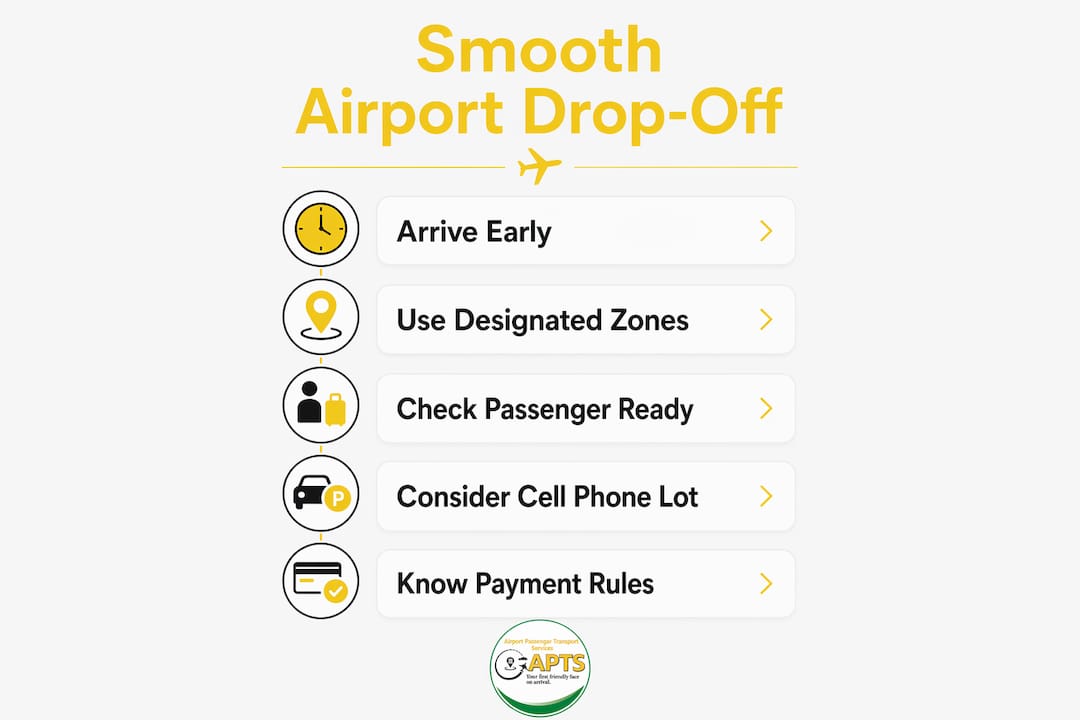
Drop-off charges at major airports have increased considerably in 2026. Understanding the fee structure before you arrive prevents an unpleasant surprise.
| Airport | Drop-off fee | Duration covered |
|---|---|---|
| Gatwick | £10 | 10 minutes |
| Heathrow | £7 | 10 minutes |
| Manchester | £5 | 5 minutes |
| Seattle-Tacoma | Free (curbside) | Active drop-off only |
Source: UK airport drop-off guide 2026
These charges apply automatically via ANPR cameras. Payment is typically cashless and processed online after your visit. Failure to pay results in a Parking Charge Notice, which carries a significantly higher penalty than the original fee.
Key points on managing costs:
- Free alternatives exist. Long-stay car parks and cell phone lots outside the immediate terminal zone are free or low-cost. The trade-off is a short walk or shuttle ride for the passenger.
- Private hire and taxi drivers face the same charges. Airport-specific payment rules apply regardless of vehicle type. Professional drivers who fail to comply risk both fines and licence complications.
- Check the airport website in advance. Fee structures change. What applied in 2024 may not apply in 2026. Always verify current charges directly with the airport authority before travelling.
For travellers using a professional transfer service, these costs are typically absorbed into the booking price. This is one practical reason why pre-booked transfers often represent better value than self-drive arrangements at fee-charging airports.
What practical tips improve your airport drop-off experience?
The difference between a stressful drop-off and a smooth one usually comes down to preparation and awareness of airport-specific quirks.
- Know the terminal layout in advance. Large airports like Dublin Airport have multiple terminals and distinct drop-off points for each. Arriving at the wrong terminal adds significant time and stress. Check your passenger’s airline and confirm the correct terminal before you set off.
- Use level-swapping when departures are congested. At some airports, dropping off on the arrivals level when the departures kerb is busy is a legitimate and effective time-saving strategy. Passengers take a lift or escalator to the correct floor. This is particularly useful during peak morning departure windows.
- Avoid peak congestion windows. Early morning departures between 05:00 and 08:00 and late afternoon departures between 16:00 and 19:00 generate the heaviest terminal traffic. If your passenger has flexibility, a mid-morning or early afternoon departure simplifies the drop-off considerably.
- Plan for accessibility needs in advance. Passengers with mobility requirements need drop-off at specific accessible points. Many airports designate these separately from standard curbside zones. Booking a vehicle with appropriate accessibility features and confirming the correct drop-off location ahead of time removes uncertainty. Apts provides accessible airport taxi services for passengers with specific requirements.
- Confirm luggage is out of the vehicle before departing. This sounds obvious, but in busy drop-off zones, drivers move quickly and bags are occasionally left in the boot. A brief verbal confirmation before pulling away prevents a costly return journey.
Pro Tip: Experienced drivers use free long-stay lots outside the immediate airport zone to avoid high fees and congestion. If your passenger is mobile and has manageable luggage, this approach saves money and removes the pressure of a timed curbside stop.
How do airport drop-off procedures differ internationally?
Drop-off rules are not universal. What works at Dublin Airport does not automatically apply at Seattle-Tacoma or Charles de Gaulle. International travellers benefit from understanding these differences before they land or depart.
| Airport | Curbside drop-off | Waiting lot | Short-term parking |
|---|---|---|---|
| Dublin (Ireland) | Free, active only | Limited availability | Paid, varies by zone |
| Heathrow (UK) | £7 for 10 minutes | Available | Paid |
| Seattle-Tacoma (USA) | Free, active only | Free cell phone lot | $5 per hour |
| San Francisco (USA) | Free, active only | Free up to 60 minutes | Paid |
The key variable across airports is whether free curbside drop-off exists and how strictly it is enforced. At Seattle-Tacoma, curbside drop-off is free but active only, with enforcement officers present. At Heathrow, the charge is automatic and unavoidable for any vehicle entering the drop-off zone.
European airports vary widely. Some French and Spanish airports retain free curbside access, while others have adopted the UK model of ANPR-based charging. The practical advice is consistent: check the specific airport’s ground transportation page before you travel. Most major airports publish their drop-off policies clearly, and this five-minute check can save you a significant penalty.
For travellers arranging airport taxi services abroad, using a professional service with local knowledge of the destination airport removes this research burden entirely.
Key takeaways
Efficient airport drop-off requires knowing your zone type, timing your arrival to recommended benchmarks, and verifying fee structures before you reach the terminal.
| Point | Details |
|---|---|
| Use designated zones correctly | Curbside drop-off is for active unloading only; idling risks fines or towing. |
| Arrive at the right time | Allow 1.5 to 2 hours for domestic and 2 to 3 hours for international departures. |
| Verify fees in advance | UK airports charge up to £10 for 10 minutes; free alternatives exist further from terminals. |
| Use cell phone waiting lots | Free lots allow up to 60 minutes of waiting, reducing congestion and cost. |
| Research international differences | Drop-off rules, fees, and enforcement vary significantly between airports and countries. |
What I have learned from years of airport drop-offs
Having observed and coordinated hundreds of airport transfers across Ireland, Spain, and beyond, the pattern is consistent: the passengers who arrive calmly are the ones whose drivers planned the drop-off, not just the journey.
The most common mistake is treating the drop-off as an afterthought. Drivers focus on the route and forget to check which terminal, which level, or whether the drop-off zone charges apply. At a busy airport, that gap in preparation costs five to fifteen minutes at minimum and sometimes a fine on top.
Level-swapping is genuinely underused. When the departures kerb at a major airport is backed up, dropping on the arrivals level and letting the passenger take a lift is faster for everyone. Most passengers do not know this is an option until a professional driver suggests it.
The other lesson is that communication tools have transformed drop-off coordination. A quick message confirming the passenger is at the kerb before the driver enters the drop-off zone removes the guesswork entirely. Drivers who communicate effectively with passengers consistently avoid the costly circling that generates both fines and frustration.
My honest view is that the airports charging £7 to £10 for ten minutes of drop-off access have made the case for professional transfer services more compelling than ever. When the cost of a self-drive drop-off includes fuel, parking charges, and the risk of a Parking Charge Notice, the arithmetic shifts quickly in favour of booking a service that handles all of it.
— Declan
Why a professional transfer service makes drop-off effortless

Navigating drop-off zones, timing arrivals, and managing fees is straightforward when you know the rules. When you do not, it is expensive and stressful. Apts provides professional taxi, executive taxi, and chauffeur services to and from airports across Ireland and Spain, with drivers who know terminal layouts, drop-off procedures, and the best strategies for avoiding delays. Whether you need taxi services for families with luggage and young children, or a premium executive transfer for a business trip, Apts handles the logistics so you focus on your journey. Book your transfer in advance and arrive at the terminal with confidence.
FAQ
What is the difference between a drop-off zone and short-term parking?
A drop-off zone is for active unloading only, typically free or charged for a very short window, and vehicles must depart immediately after passengers exit. Short-term parking allows the driver to leave the vehicle unattended for a longer period at an hourly rate.
How long can you wait in a cell phone lot at the airport?
Most airports that provide cell phone waiting lots allow drivers to wait free of charge for up to 60 minutes. San Francisco International Airport follows this model, making it the recommended option for drivers who arrive before their passenger is ready at the kerb.
Are airport drop-off charges the same at every UK airport?
No. Charges vary significantly. Gatwick charges £10 for 10 minutes, Heathrow charges £7 for 10 minutes, and Manchester charges £5 for 5 minutes. Always check the specific airport’s website before travelling to confirm current fees.
What happens if you do not pay an airport drop-off charge?
Unpaid drop-off charges result in a Parking Charge Notice, which carries a higher penalty than the original fee. ANPR cameras record vehicle registration plates automatically, so non-payment is detected without an enforcement officer being present.
How do you find the correct drop-off point for your terminal?
Check the airport’s official ground transportation page before you travel. Most major airports publish terminal maps with drop-off zone locations clearly marked. Confirming your passenger’s airline terminal in advance prevents arriving at the wrong entrance.
Recommended
- How to get airport pickup: a clear 2026 guide
- How to communicate with airport taxis for smooth transfers
- How to schedule airport transfers for stress-free travel
Article checked by Declan Rodden.