
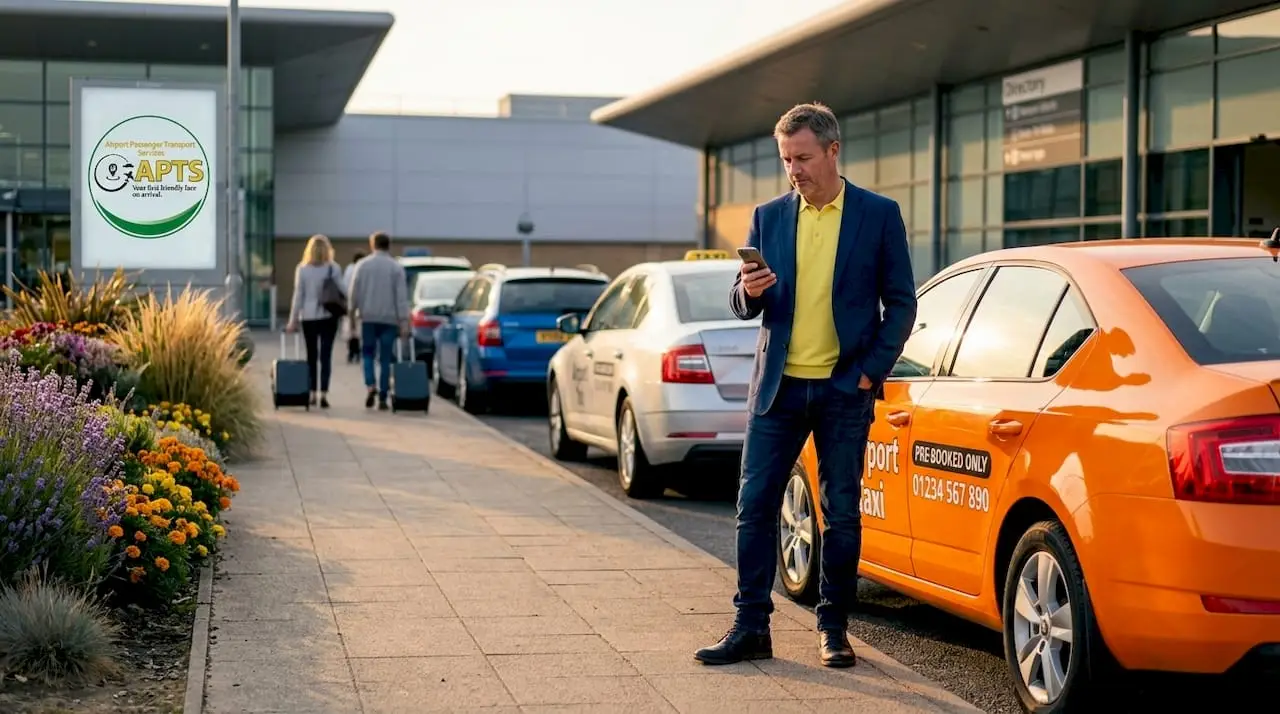
Pre-booking your airport transfer is the single most effective way to save on airport taxis, cutting costs by locking in fixed fares before surge pricing takes hold. Airport taxi costs are shaped by three forces: booking timing, pickup location, and vehicle type. Travellers who understand how airport-imposed surcharges, shared shuttle services, and off-peak scheduling interact can reduce their transfer costs significantly. This guide covers the most practical ways to save on holiday taxis and airport transfers across major airports in Ireland, Spain, and beyond.
1. Pre-book your taxi to lock in a fixed fare
Pre-booking an airport taxi is the most reliable method for securing a lower, predictable fare. When you book in advance, operators price based on distance and vehicle type rather than real-time demand. That means no surge multipliers, no guesswork, and no unpleasant surprises at the end of a long flight.
The key benefits of pre-booking include:
- Fixed pricing: Your fare is agreed before travel, regardless of traffic or demand spikes on the day.
- No surge exposure: Ride-hailing apps like Uber apply dynamic pricing during busy periods. Pre-booked transfers bypass this entirely.
- Guaranteed availability: Particularly useful during bank holidays, school breaks, or major events when vehicles are scarce.
- Meet and greet service: Many pre-booked services include a driver waiting at arrivals, removing the stress of locating your transfer.
Pro Tip: Book at least 48 to 72 hours before your flight. For group travel, reserving multiple seats in a shared vehicle at this window typically secures the lowest per-person rate.
Understanding airport taxi pricing before you book helps you identify which fare components are fixed and which are variable, so you know exactly what you are paying for.

2. Use shared shuttle services to split the cost
Shared airport shuttles are a growing category of budget-friendly taxi services that pool multiple passengers travelling in the same direction into a single high-occupancy vehicle. The per-person cost drops considerably compared to a private hire, making them one of the most cost-effective cheap airport taxi options for solo travellers and couples.
Boston Logan Airport offers a clear example of how this model works in practice. Shared Uber and Lyft shuttles serve Logan for under $20 per seat, with Lyft shuttle pricing ranging from $13 to $16. That compares favourably with a standard taxi fare from central Boston, which regularly exceeds $40. The savings are substantial without requiring any compromise on door-to-door convenience.
Shared shuttles reduce congestion and provide more affordable, predictable pricing than curbside taxis by pooling passengers in high-occupancy vehicles on fixed routes.
Key points to keep in mind when using shared shuttles:
- Pickup and drop-off points are fixed. Arriving late to a designated zone means missing your vehicle and potentially rebooking at a higher fare.
- Schedules are set in advance. Shared shuttles suit travellers with confirmed flight times rather than those with flexible or connecting itineraries.
- Journey times may be slightly longer due to multiple stops, so allow extra time when catching a flight.
For a detailed comparison of taxi versus shuttle options, including when each makes financial sense, Apts has published a dedicated guide covering both cost and convenience factors.
3. Choose your pickup or drop-off location carefully
Airport-imposed access fees are one of the least-discussed drivers of high taxi fares, yet they directly affect what you pay. Many major airports now charge commercial vehicles a surcharge for accessing terminal curbs, and those charges are passed directly to passengers.
At LAX, ride-hailing services face an additional $12 fee for direct terminal curb access once the SkyLink people mover opens, comprising a $6 commercial vehicle access charge plus a $6 central terminal access charge. Choosing an alternative pickup zone, such as a Ground Transportation Centre located away from the main terminal, avoids this surcharge entirely.
Edinburgh Airport increased its drop-off fee from £6 to £8.50 in 2026, a cost that feeds directly into the fares passengers pay. The table below illustrates how location choices affect total transfer costs at two major airports:
| Airport | Terminal curb fee | Alternative zone fee | Passenger saving |
|---|---|---|---|
| LAX (Los Angeles) | $12 per trip | $0 at off-site staging area | Up to $12 per journey |
| Edinburgh Airport | £8.50 drop-off charge | Reduced or waived at free zones | Up to £8.50 per journey |
The practical takeaway is straightforward. Before travelling, check your airport’s ground transport map and identify whether a free or lower-cost pickup zone exists. Walking an extra five minutes to a staging area can save you more than the cost of a coffee at the airport.
4. Time your journey to avoid surge pricing
Surge pricing during busy airport periods causes taxi fare spikes that can double or triple the base rate. Avoiding peak windows is one of the simplest ways to reduce taxi costs without changing your vehicle type or booking method.
Peak airport periods typically include:
- Early morning departures: The 5am to 8am window sees high demand from business travellers and early-flight passengers.
- Friday and Sunday evenings: These are the busiest periods for leisure travel, particularly around bank holidays.
- Major event days: Concerts, sporting fixtures, and national holidays create localised surges that affect airports and city centres simultaneously.
- School holiday start and end dates: Demand spikes sharply at the beginning and end of half-term and summer breaks.
Travelling outside these windows, even by 30 to 60 minutes, can result in noticeably lower fares on dynamic pricing platforms. Off-peak travel also means less congestion, shorter journey times, and a more comfortable experience overall.
Pro Tip: If your schedule allows flexibility, use a ride-hailing app to check estimated fares at different departure times before confirming your booking. A one-hour shift in pickup time can reduce the fare by 20% or more during high-demand periods.
5. Compare public transit as a genuine alternative
Public transit is the most underused tool for saving money on airport transfers, particularly for solo travellers and those travelling light. Airport trains and buses frequently cost $30 to $80 less per trip than taxis in major cities. In New York, the subway and AirTrain combination costs approximately $12 compared to a $70 taxi fare. London’s Heathrow Express costs around $32 versus a £90 black cab fare.
The trade-offs are real but manageable for many travellers:
- Luggage: Trains and buses suit travellers with one or two bags. Large families or those with oversized luggage will find taxis more practical.
- Journey time: Rail links like the Heathrow Express or Dublin’s Aircoach are often faster than taxis during peak traffic hours.
- Cost per person: For a solo traveller, public transit delivers the greatest saving. For a group of four, a pre-booked private taxi often costs less per person than four individual transit fares.
- Accessibility: Passengers with mobility requirements or young children may find taxis more suitable despite the higher cost.
Reloadable travel cards, family day passes, and off-peak rail tickets further reduce transit costs. In Dublin, the Aircoach service offers a fixed-price route between Dublin Airport and the city centre that undercuts most taxi fares for individual passengers while maintaining a reliable schedule.
6. Book group travel in a single vehicle
Group travel is one of the most overlooked opportunities for saving money on airport transfers. Booking a single minibus or people carrier for four or more passengers consistently costs less per person than booking individual taxis or multiple rideshare seats.
A standard executive taxi for four passengers from Dublin Airport to the city centre typically costs less than four separate rideshare fares combined. The saving increases further when airport access fees are factored in, since a single vehicle incurs one fee rather than four. Taxi services for families and groups benefit most from this approach, particularly when travelling with children’s car seats, pushchairs, or significant luggage.
The calculation is simple. Divide the total fare by the number of passengers and compare it against the per-person cost of individual bookings or shared shuttle seats. For groups of four or more, a private vehicle almost always wins on both cost and convenience.
7. Research airport-specific fee structures before you travel
Airport rideshare pricing varies dramatically based on access fees, and travellers who research local airport rules before travelling consistently pay less than those who do not. Fee structures differ between airports, between terminals within the same airport, and between vehicle categories.
Before any trip, spend five minutes reviewing the ground transport section of your departure or arrival airport’s website. Look for:
- Whether terminal curb access carries a surcharge for taxis or rideshare vehicles.
- Whether a free or lower-cost Ground Transportation Centre or staging area exists.
- Whether your chosen operator includes airport fees in their quoted fare or adds them at the end.
- Whether the airport offers a fixed-price taxi zone with regulated fares.
This research takes minimal time but can prevent unexpected charges that inflate your transfer cost by £5 to £15 or more. Apts provides guidance on comparing airport taxi prices across different operators and fee structures, which is particularly useful when travelling to unfamiliar airports.
Key takeaways
Pre-booking, choosing the right pickup location, and travelling off-peak are the three most effective ways to reduce airport taxi costs in 2026.
| Point | Details |
|---|---|
| Pre-book for fixed fares | Booking 48 to 72 hours ahead locks in a set price and eliminates surge pricing risk. |
| Avoid terminal curb surcharges | Using alternative staging areas at airports like LAX can save up to $12 per journey. |
| Shared shuttles cut per-person costs | Services like Lyft and Uber shuttles at Boston Logan cost as little as $13 to $16 per seat. |
| Public transit saves £30 to £80 | Rail and bus options undercut taxis significantly for solo travellers in major cities. |
| Group bookings reduce per-person fares | A single vehicle for four or more passengers almost always costs less per head than individual fares. |
The savings are there, but you have to look for them
Most travellers overpay for airport transfers not because cheap options do not exist, but because they book too late or do not check the fee structure at their specific airport. I have seen passengers pay $12 in access fees alone at LAX simply because they did not know a free staging area was available 400 metres away. That is not a knowledge gap that requires hours of research. It requires five minutes on the airport’s website before you travel.
The travellers who consistently pay less are not the ones who sacrifice comfort. They are the ones who pre-book, check the pickup zone, and travel slightly outside peak hours when their schedule allows. Shared shuttles are genuinely worth considering for solo travellers on a tight budget, but they require discipline around timing and pickup locations. Missing a fixed-route shuttle and rebooking at surge prices eliminates the saving entirely.
My honest recommendation is to treat the transfer as part of your travel planning rather than an afterthought. The best airport taxi deals are not found at the kerb. They are found 48 hours before departure, with a confirmed booking, a fixed fare, and a driver who knows exactly where to meet you.
— Declan
Plan your airport transfer with Apts
Apts offers professional taxi, executive taxi, and chauffeur services to and from airports throughout Ireland and Spain, with transparent pricing and no hidden surcharges. Whether you are travelling solo, with family, or as part of a corporate group, Apts provides fixed-fare transfers that remove the uncertainty from your journey. Visit the Apts airport transfers page to check availability and book your next transfer with confidence. For a full breakdown of how fares are calculated, the airport taxi pricing guide covers every component in plain language, so you know exactly what you are paying for before you confirm.
FAQ
How far in advance should I book an airport taxi?
Book at least 48 to 72 hours before your transfer to secure a fixed fare and avoid surge pricing. Booking earlier is advisable during school holidays, bank holidays, and major events.
Do airport access fees always get added to my taxi fare?
Most operators pass airport access fees directly to passengers, either included in the quoted fare or added at the end. Always confirm whether the quoted price is all-inclusive before booking.
Are shared shuttles cheaper than private airport taxis?
For solo travellers and couples, shared shuttles are typically cheaper. Lyft and Uber shuttles at Boston Logan cost $13 to $16 per seat, compared to $40 or more for a private taxi. For groups of four or more, a private vehicle often costs less per person.
When is surge pricing most likely to affect airport taxi fares?
Surge pricing peaks during early morning departures, Friday and Sunday evenings, school holiday periods, and major local events. Travelling 30 to 60 minutes outside these windows can reduce fares noticeably on dynamic pricing platforms.
Is public transit always cheaper than an airport taxi?
Public transit costs $30 to $80 less per trip than taxis in most major cities, but the saving depends on group size, luggage volume, and journey complexity. For families or passengers with significant luggage, a pre-booked taxi often offers better overall value.
Recommended
- How to get airport pickup: a clear 2026 guide
- Taxi services for families: your 2026 guide
- Airport taxi pricing explained: a traveller’s guide
- Sustainable airport transfers: your 2026 green travel guide
Article checked by Declan Rodden.